Sing Test: Find Out How Well You Really Sing
Take a free sing test right in your browser. Sing into your mic for 20 seconds and get a pitch score, your vocal range, and your voice type instantly. No signup, no audience, no judgment.
Your browser will ask to use your microphone.
What Is a Sing Test?
A sing test is a short vocal assessment that measures how accurately you sing. SingTest listens through your microphone while you match a series of guide notes, then scores three things: pitch accuracy (how close you land to each note), vocal range (your lowest and highest comfortable notes), and voice type (from bass to soprano).
Most people score better than they expect. In published research, 85–90% of occasional singers could sing in tune when measured properly, yet about 60% assumed they couldn't. A sing test replaces that guesswork with a number you can track.
PMC3140645Pitch accuracy score
Match the guide notes and see how far you drift, note by note. Your sing test result is a score out of 100.
Vocal range finder
Slide from your lowest note to your highest. The sing test maps your range and names both ends, like A2 to E5.
Voice type result
Your range places you in a voice type (soprano, mezzo, alto, tenor, baritone, or bass), the same way a choir director would.
Instant results
Your sing test score appears seconds after you stop singing. No processing queue, no email gate.
Private by design
Audio is analyzed inside your browser. Nothing is recorded, stored, or uploaded to a server.
No signup needed
Open the page, allow the mic, sing. The whole sing test takes about two minutes from start to score.
See Every Note You Hit — and Every One You Missed
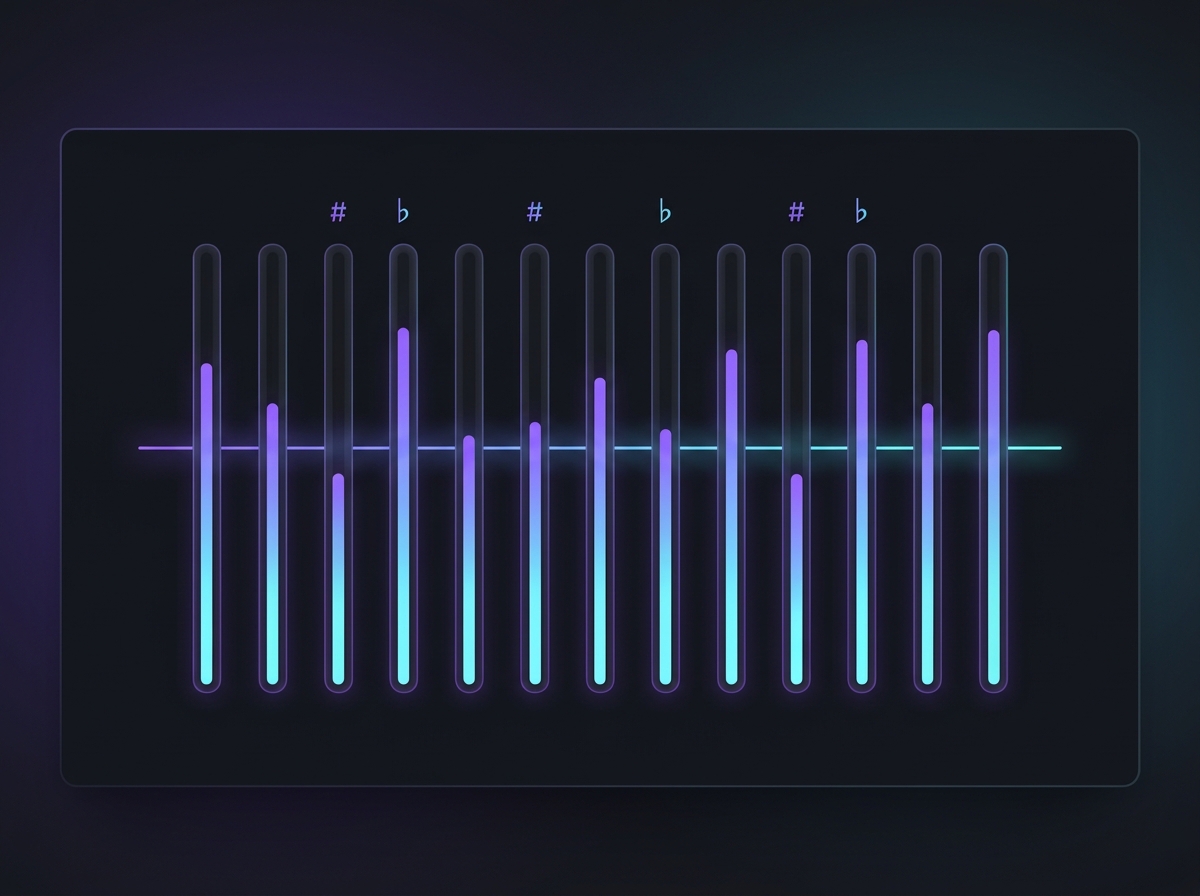
The sing test plays a note, you sing it back, and the pitch meter shows exactly where your voice landed: sharp, flat, or dead on.
The sing test ends with a note-by-note breakdown, so you know whether you drift on high notes, low notes, or jumps between them.
Find Your Vocal Range and Voice Type
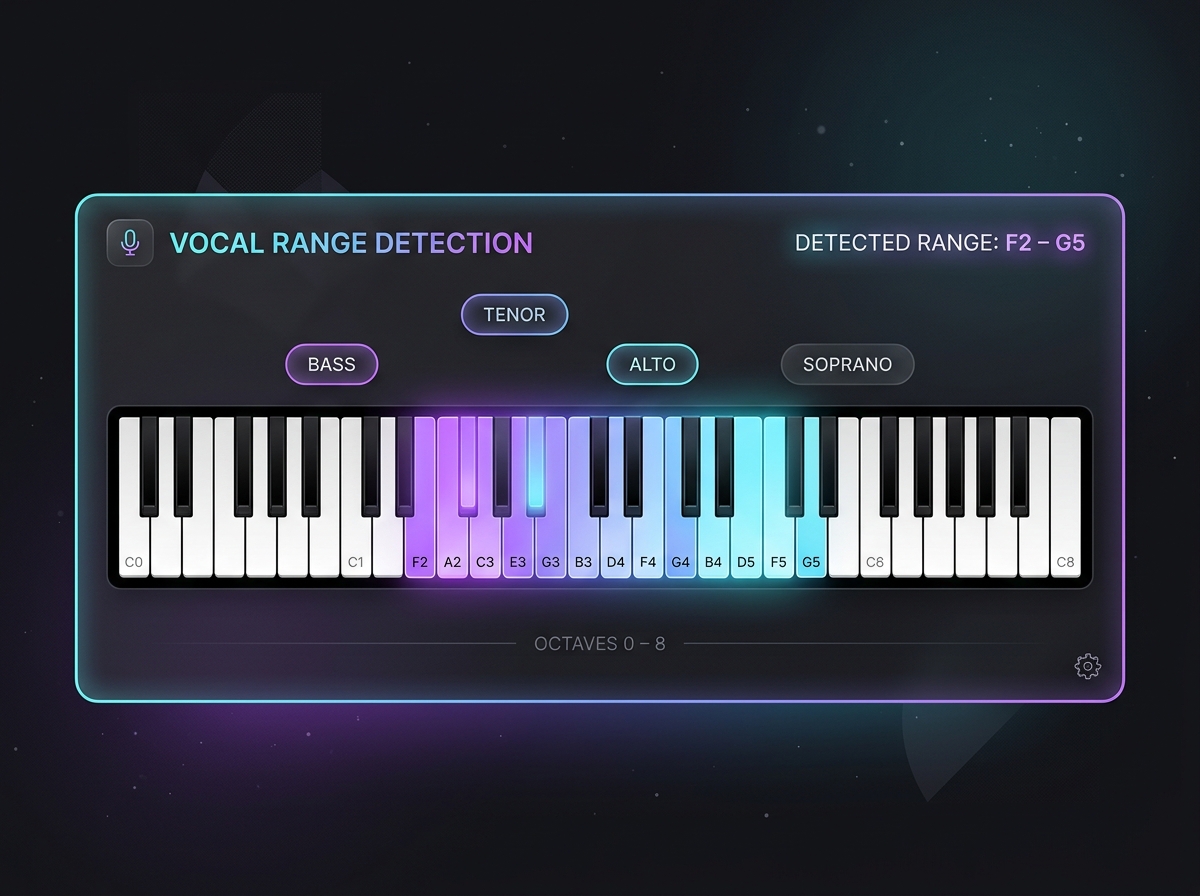
The second half of the sing test walks your voice down to its lowest note, then up to its highest. That span is your vocal range, written in real note names.
Your sing test range maps to a voice type, from bass up to soprano, which tells you which songs and keys actually fit your voice.
How the Sing Test Works
Allow your microphone
Open the sing test and click allow when your browser asks for mic access. No account, no download.
Match the guide notes
The sing test plays a short series of notes. Sing or hum along while the meter shows your pitch in real time.
Slide through your range
Follow the prompts down to your lowest comfortable note, then up to your highest. Don't strain; comfort counts.
Get your score
See your pitch accuracy out of 100, your vocal range in note names, and your voice type. Retake the sing test any time.
When a Sing Test Comes in Handy
Before karaoke night
Run a quick sing test to find your range, then pick songs in keys you can actually hit.
Prepping an audition
Choir and musical auditions ask for your voice type. A sing test gives you the answer before they do.
Starting voice lessons
Take a sing test on day one and save the score. It becomes the baseline that proves your lessons are working.
Settling the argument
Someone said you can't sing. The sing test gives you a number instead of an opinion.
Sing Test FAQ
Is the sing test free?
Yes. The sing test is completely free — no account, no credit card, no trial countdown. Open the page, allow your microphone, and sing. You can retake it as many times as you want and compare scores over time.
How accurate is an online sing test?
Pitch detection in modern browsers is accurate to within a few cents, far finer than the roughly 10-cent difference most ears can hear. Your sing test score reflects real measurements of your voice, not a personality quiz. Use headphones and a quiet room for best results.
Do I need to know how to sing before taking a sing test?
No. The sing test is built for beginners: you hum or sing simple notes, not a full song. Research shows 85–90% of untrained singers can sing in tune, so odds are you'll score higher than you expect.
What exactly does the sing test measure?
The sing test measures three things: pitch accuracy (how close you sing to each guide note, scored out of 100), vocal range (your lowest to highest note, like G2–C5), and voice type (bass, baritone, tenor, alto, mezzo-soprano, or soprano). Together they give you a practical snapshot of your singing voice.
Can I improve my sing test score?
Yes, and usually quickly. Pitch matching is a trainable skill. Retake the sing test after a week of short daily practice and most people see their accuracy score climb. Your range grows too as your voice warms up and your technique improves.
Is my voice recorded or uploaded?
No. The sing test analyzes your microphone signal inside your browser and throws the audio away in real time. Nothing gets recorded or uploaded. Your score is the only thing that exists when you finish.
What's the difference between a sing test and a vocal range test?
A vocal range test only finds your lowest and highest notes. A sing test goes further: it measures pitch accuracy against guide notes, maps your range, and assigns a voice type. Range tells you where your voice sits. The full sing test tells you how well it performs there.
What counts as a good sing test score?
Above 90 means you land within a quarter-tone of most notes, which is reliably in tune. 70–90 is solid for an untrained voice, with drift mostly on wide jumps. Below 70 usually means a few specific notes pull you off, and the note-by-note breakdown shows which ones to practice.
Ready to Take the Sing Test?
Two minutes, one honest score. The free sing test finds your pitch accuracy, your range, and your voice type in your browser. No signup.